

America’s sun-care market has long trailed behind its global counterparts (especially Europe and Asia’s expansive SPF innovations), but now, we’re one step closer to slathering on better sunscreen. Surprisingly, some good news came out of Washington, D.C. last week: On June 9, the U.S. Food and Drug Administration (FDA) officially approved bemotrizinol (BEMT) as a permitted sunscreen active ingredient. It’s a major win for stateside SPF fans (and, frankly, anyone with skin), as it marks the first new addition to the FDA’s over-the-counter sunscreen monograph since 1999.
What is Bemotrizinol?
BEMT — also known by its trade name Tinosorb S — is a broad-spectrum chemical UV filter that protects against both UVA and UVB radiation. “One of its most notable characteristics is that it is highly photostable, meaning it does not significantly degrade when exposed to sunlight, allowing it to provide consistent UV protection throughout sun exposure,” Dr. Hadley King, a New York City-based board-certified dermatologist, tells Fashionista. It can also “improve the performance of other UV filters when used in combination formulations,” she adds. Another purported benefit is low skin absorption. (Some older chemical SPF filters have been found in the bloodstream after routine use, spurring demonization within “clean” beauty circles.)
BEMT is currently the only chemical sunscreen filter recognized by the FDA as GRASE (Generally Recognized as Safe and Effective). Plus, it’s been widely used across Europe, Asia and Australia for years in fan-favorite formulations like Bioré’s UV Aqua Rich Watery Essence and Beauty of Joseon’s Relief Sun Aqua Fresh. Put simply, it’s “one of the most sophisticated sunscreen filters available globally,” per Dr. King.
Related: This Emerging SPF Brand Is Making Mineral Sunscreen ‘Sexy’
As you may have guessed from the 27-year gap, getting a sunscreen filter approved in the U.S. is no small feat. Because they’re regulated as over-the-counter drugs in the U.S., they are required to undergo rigorous testing for safety and efficacy before receiving governmental approval. Global sun-care markets, particularly those in Europe and South Korea, are lightyears ahead of the U.S. because they categorize sunscreen as cosmetics, meaning there are fewer regulatory hoops to jump through. As a result, global sunscreen formulators have access to innovative (and more protective!) filters like bisoctrizole, drometrizole trisiloxane (DT) and terephthalylidene dicamphor sulfonic acid (TDSA).
“For years, dermatologists have pointed out that American consumers had access to fewer UV filters than consumers in many other countries,” Dr. King says. “The addition of BEMT represents a meaningful step toward modernizing sunscreen options in the U.S. and encouraging innovation in sun protection.”
Although the secretary of the U.S. Department of Health and Human Services (a.k.a. He Who Shall Not Be Named) may take credit for this achievement, Swiss nutrition, health and beauty corporation DSM-Firmenich has spent two decades and at least $18 million in pursuit of BEMT’s FDA approval. BEMT will be sold under the name Parsol Shield, and DSM-Firmenich owns the exclusive rights to market the filter in the U.S. for 18 months.
Photo: Courtesy of Good Weather Skin
What the Approval Means for Brands
But, what does the approval of this new SPF filter mean for the independent, U.S.-based brands leading sun-care innovations? For many, it’s been a long time coming.
“It’s about damn time,” says Dieux Co-Founder and Chief Brand Officer Charlotte Palermino. (She’s also a content creator who has been vocal about the need for new sunscreen options on her channels.) “Now we need to fast-track approval of the 10+ outstanding international filters that aren’t approved yet but are used internationally to great success.”
Several U.S. sun-care brands are welcoming this new SPF filter with open arms. Dieux, a skin-care brand known for its moisturizers, has spent years working on its first-ever sunscreen, and BEMT is part of its formulation process. “Not to give any spoilers, but our favorite version does have the new filter,” she teases. Black Girl Sunscreen has been anticipating the new ingredient for nearly two years and has also already started development with it, according to Founder Shontay Lundy and Director of Brand Development & Sales Dinh Pham.
Australian sun-care brand Ultra Violette has been formulating with BEMT since its 2019 launch, which initially complicated its expansion into the U.S. market. “We held off the U.S. launch for as long as we could because we’d heard whispers [BEMT] was coming, but eventually decided to launch in 2025 with formulations equal to our existing range without BEMT,” Co-Founder Ava Matthews says. Now, it’s full steam ahead: Ultra Violette’s popular Fave Fluid and Queen Screen formulations will launch in the U.S. in 2027. In the meantime, it’s preparing for three BEMT formulas to land at Sephora U.S. within the next six months, with the first (an SPF designed for acne-prone skin) hitting shelves in September. It’s also worth noting that Ultra Violette recalled one of its mineral SPF formulations last year after discovering atypical variability in its SPF levels. (More on that in a moment.)
Photo: Courtesy of By the Beach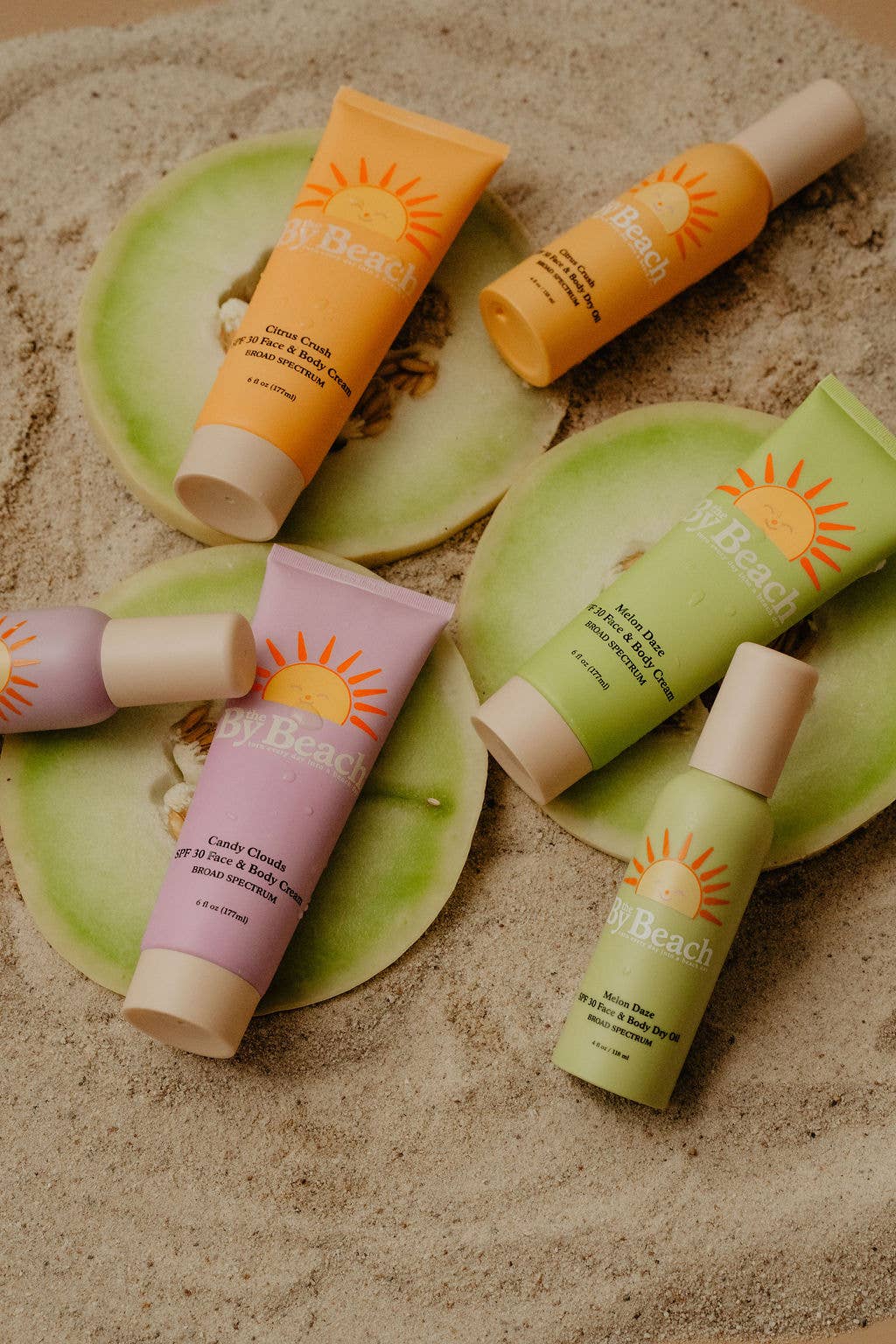
Sensorial SPF brand By the Beach‘s Co-Founder Andrew Glass notes that the company is open to exploring the new filter in future formulations after completing the proper testing. “For indie brands, that opens the door to more elegant textures, lower perceived greasiness and potentially less reliance on heavier filter systems,” he says.
Good Weather Skin, a mineral-focused SPF brand, is curious: “We’re anchored in non-nano zinc oxide, and we’re not moving away from that without good reason, but we have active conversations happening with our chemists, and we’re curious about what this approval might make possible,” Co-Founders Alexandra Spunt and Franchesca Hashim share. Dune Suncare is also “approaching [BEMT] with curiosity rather than urgency,” Co-Founder Emily Doyle says, as the brand wants to “learn more about how this active performs within the specific parameters of our formulas before making any hasty decisions.”
Related: The Rising Makeup Brand Putting Sunscreen in All Its Products
The Safety Discourse
As U.S. sun-care brands look to incorporate BEMT into their products, Palermino points out that “there have been many scandals involving sunscreen manufacturers marketing SPF values well above what they actually contain in the bottle,” noting that the issue “appears to disproportionately impact mineral sunscreens.” In Australia last year, regulators discovered that many sunscreens delivered protection far short of their advertised SPF, including Ultra Violette’s Lean Screen SPF 50+ that showed inconsistent mineral SPF levels in independent testing. (Ultra Violette subsequently recalled all batches of Lean Screen, and a “next-generation” iteration is now in the works.)
“My hope is that, with BEMT, brands will move away from the harmful and unhelpful ‘100% mineral sunscreen’ positioning and instead make formulas that leverage BEMT, which has strong safety data,” Palermino continues.
In today’s landscape of sunscreen misinformation (specifically the “clean” beauty movement’s ill-informed abhorrence of chemical SPFs and general anti-SPF propaganda), Glass flags that consumer reactions to a new chemical filter may vary. “Indie brands will need clear messaging that explains benefits without creating fear around existing approved sunscreen ingredients,” he advises. After all, we can spend days splitting hairs about which SPF filters reign supreme, but the indie SPF brands (and derms!) we consulted agree: The best sunscreen is always the sunscreen you’ll actually wear every day.
Photo: Courtesy of Ultra Violette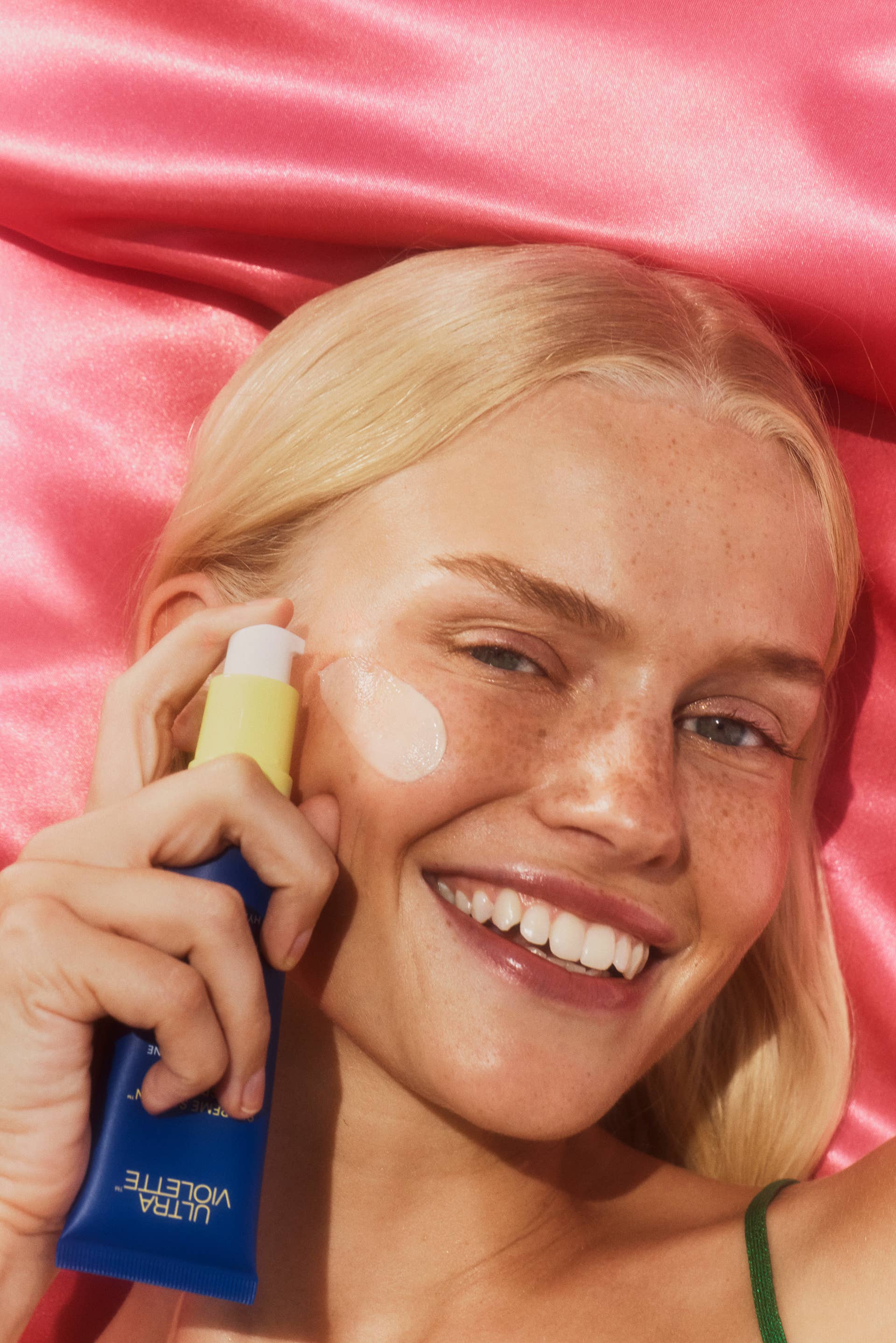
The Future of BEMT-Powered Sunscreen
Specifics on BEMT’s pricing and access remain unclear, posing a potential financial complication for independent brands. As Lundy and Pham point out, indie labels face “a lot of upfront R&D cost with testing and validation which can be challenging for smaller brands compared to legacy brands.” Doyle concurs: “Those resources are finite — so the bar for ‘why this, why now’ needs to be high.” According to Matthews, BEMT “is more expensive than the traditional chemical UV filters,” so indie brands may need to account for a spike in cost of goods, especially if they’re reworking an existing product or starting from scratch.
The first U.S. sunscreen formulas with BEMT are expected to be available in stores as early as this September, but that timeline may be longer for indie sun-care brands. Nonetheless, BEMT’s FDA approval is a (rare) moment of progress, putting the U.S. one step closer to leveling the sunscreen playing field.
“Americans have been waiting a long time for access to newer sunscreen technology,”
Seattle-based board-certified dermatologist Dr. Heather Rogers says. “Consumers should know that they don’t need to throw out their current sunscreen, but they can look forward to seeing products formulated with this ingredient in the U.S. market.”
Please note: Occasionally, we use affiliate links on our site. This in no way affects our editorial decision-making.
