

Photo: Michael Nagle/Bloomberg/Getty Images
Zohran Mamdani, a quick learner, has joined a long list of New York mayors who took the oath of office and promptly began slamming their predecessor for leaving the city’s finances in shambles.
At the White House, in a tradition started by Ronald Reagan, departing presidents have left a personal handwritten note on the Resolute Desk for their successor to discover upon entering the Oval Office after the inauguration. Here in Gotham, newly minted mayors stride into City Hall and find a thick stack of unpaid bills.
“What’s so hard to come to terms with is that we had not seen any indications from the prior administration that they were looking at this,” Mamdani told me, describing the city’s budget gap of $12 billion. “This was something that they kept pushing off until it wasn’t their problem.”
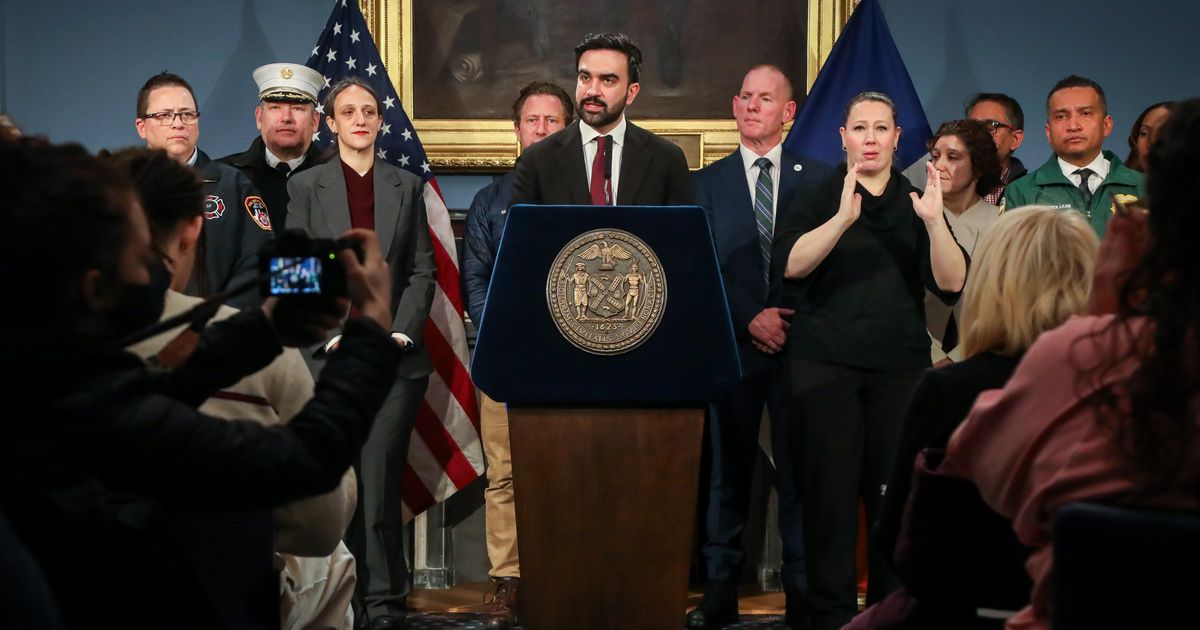
Mamdani says Eric Adams is to blame. “This crisis has a name and a chief architect. In the words of the Jackson 5, it’s as easy as A-B-C. This is the Adams budget crisis,” Mamdani told reporters at a press conference. “In 2025, under the banner of what he called the ‘best budget ever,’ former mayor Eric Adams handed the next administration a poisoned chalice. He systematically underbudgeted services that New Yorkers rely on every single day.”
It all sounds familiar to New Yorkers of a certain age. In the same building where Mamdani railed against Adams, Mayor John Lindsay blamed his predecessor, Robert Wagner, for leaving him a budget deficit in 1966. The next mayor, Abe Beame, attacked Lindsay for running up the city’s debt in ways that led to its near-bankruptcy in 1975. Two years later, Ed Koch defeated Beame and a crowded field of challengers by promising to clean up Beame’s mess. And so on down the line, with Bill de Blasio leaving a relatively small $2 billion gap for Adams to complain about.
There’s no question that Adams played budget tricks, but Mamdani had ample advance warning of what he was walking into: Today’s $12 billion hole was among the worst-kept secrets in city government. Last August, state comptroller Tom DiNapoli published a grim report noting that the Adams administration’s own estimates pointed to a $17.1 billion gap over the next three fiscal years, and DiNapoli called even that number “understated,” noting that “it is unfortunate that the city elected not to add funding to its annual contingencies and the city’s rainy-day fund” for the past three years.
A few months later, the city’s Independent Budget Office offered a similar assessment, estimating a $14 billion budget hole and lamenting that “tax revenues have not kept pace. This has left no fiscal cushion to address gaps in the 2027 budget.” And shortly before leaving office, city comptroller Brad Lander’s mid-December report forecast the current problem in unusually blunt terms. “After years of budget gimmicks, the Adams administration is walking out the door leaving the next administration holding the bag as they stare down a more than $10 billion budget gap,” Lander said. “This office has observed a recurring pattern of decisions that defer difficult budget choices rather than address them — leaving a challenging fiscal landscape for the next mayor.”
None of these official forecasts captured the public’s attention in the closing weeks of last year’s hard-fought municipal campaign, though a few media outlets duly reported on the coming storm. Urgent questions of affordability, high rents, public safety, antisemitism, immigration, and attacks by the Trump administration were top of mind for voters; finding money for the rainy-day fund in fiscal year 2028, understandably, was not. Former governor Andrew Cuomo and Republican Curtis Sliwa, the candidates who built fiscal guardrails around their campaign platforms, watched Mamdani surge on bold promises to deliver big-ticket items like free bus service and universal child care.
Now that he’s in office, Mamdani plans to fulfill those promises and address New York’s supposedly surprising deficit by convincing state legislators and Governor Kathy Hochul to approve a tax hike on high-income New Yorkers as well as finding cost cuts inside city agencies. “I’ll be going up to Albany for what is affectionately known as Tin Cup Day and making very clear this is the scale of the crisis at hand,” the mayor told me. “This is where we need Albany’s partnership to actually resolve it.”
That won’t be easy and may not be politically wise. Persuading Hochul and the legislature to raise taxes on millionaires or anybody else in an election year is a tough hill to climb, and Hochul has repeatedly ruled out a hike. Getting her to change her mind is not impossible, but doing so will consume vast amounts of political capital Mamdani may need for other fights, such as regaining control of the city’s jails, properly funding health benefits for retired city employees, or resuming an ongoing battle with the federal government to properly fund the New York City Housing Authority. It’s far easier for the mayor to ease up on the demand for new taxes and simply accept gifts like Hochul’s offer to put $1.2 billion in state money toward building out Mamdani’s promised child-care program.
And even if Mamdani pulls off the unlikely feat of taxing the rich, the new city comptroller, Mark Levine, says it will all be for naught if Mamdani cannot slow the city’s biggest runaway costs in ways that go beyond saving a few million here or there. At the top of this list, according to Levine, is the awkwardly named City Fighting Homelessness and Eviction Prevention Supplement program (CityFHEPS), which provides rent vouchers to low-income New Yorkers. “CityFHEPS is growing by 4 percent a month. That means it’s doubling every year and a half,” Levine told me. “It was in the budget for the fiscal year we’re currently in for about $600 million; it’s actually going to come in at over $2 billion, and the gap is even bigger for the next fiscal year. When you underbudget a program that we can all see is growing, you’re going to be in for hitting a gap. That’s exactly what happened.”
Other exploding multibillion-dollar costs, such as employee overtime, special education, and the cost of sheltering the homeless, says Levine, are formidable but not impossible to solve. “This is not catastrophic. We’re not talking about mass layoffs. We’re not talking about major reductions in city services,” he told me. “Before we have a strong case on tax increases, we’ve got to get our own fiscal house in order. We’ve got to find some savings. There’s no way out of this without some of those actions.”
Will the mayor get serious about structural reform or follow the easier path of resorting to rallies and speeches to drum up popular political pressure for a likely quixotic tax hike? We’ll find out when he releases a detailed budget on February 17. So far, Mamdani has shown a taste for pragmatism over unwinnable battles; we’ll see if that trend continues.
