
A decade ago, if you’d asked me about potassium, I probably would have said something vague about bananas and muscle cramps. That was about the extent of what I understood. But the more I’ve learned about minerals and the body’s electrical system, the more convinced I am that potassium is one of the most overlooked pieces of the wellness puzzle.
This matters more now than ever because many of us are living in a strange combination of overfed and undernourished. We often consume plenty of calories while still missing the minerals that help the body produce energy, regulate stress, and communicate at the cellular level. I’ve talked before about “nature deficit disorder” and how disconnected we’ve become from the rhythms and foods humans traditionally relied on. Potassium is one of the missing puzzle pieces from those natural rhythms.
Our ancestors ate potassium-rich foods like roots, fruits, broths, and mineral-rich plants. However, modern diets often contain far less of these foods and minerals in general. When I intentionally replenished potassium alongside sodium and magnesium, I noticed a dramatic difference in my energy, mood, and overall resilience.
Why Potassium Is So Important
Potassium is considered the body’s primary intracellular electrolyte. Simply put, most potassium exists inside our cells. Sodium, by contrast, mostly exists outside the cells. Together, these minerals help create the electrical charge that allows the body to function properly. Understanding this process really changed how I thought about health.
We tend to think of the body mainly as a chemical system, but it’s also electrical. Every heartbeat, muscle contraction, nerve impulse, and brain signal relies on electrical communication. Potassium helps regulate that communication.
It influences how cells fire, how muscles contract, how the heart maintains rhythm, and even how calm or stressed we feel. When potassium is low, those systems can become less stable. This is one reason why deficiency symptoms can show up in so many different ways.
I like to think of the three major electrolytes in simple terms. Sodium is the charger, magnesium is the relaxer, and potassium is the balancer. Potassium helps stabilize the system. It works behind the scenes to help the body maintain steady energy and proper communication between cells. Without enough potassium, the body can start to feel like it’s running on unstable wiring.
Understanding the Sodium-Potassium Pump
One of the most fascinating parts of potassium’s role in the body is how it works in the sodium-potassium pump. This process constantly moves sodium and potassium in and out of cells to maintain electrical balance. It happens continuously, all day long, and it requires an enormous amount of energy from the body to keep running.
This electrical exchange powers many of the systems we depend on every second of the day. It supports nerve signaling, brain function, muscle movement, heartbeat rhythm, and cellular energy production. Our body uses a huge percentage of energy to maintain this electrical balance. That’s part of why minerals matter so much for overall health and energy levels.
When potassium levels are too low, this system becomes less efficient. The result can look like fatigue, brain fog, sluggish metabolism, blood sugar issues, feeling anxious and overstimulated. It’s one reason why I think minerals are often missing from the conversation around chronic stress and low energy. We can focus so heavily on hormones and calories while overlooking the minerals that help power the body in the first place.
Calming Potassium For the Nervous System
Potassium also plays a major role in regulating the nervous system. Sodium activates nerve signals, while potassium resets the nerves afterward so they can fire normally again. Without enough potassium, nerves overreact or stay in a heightened state longer than they should.
This may help explain why low potassium is sometimes connected to symptoms like heart palpitations, twitching, internal shakiness, or anxious feelings. I find this especially interesting because so many people today seem stuck in a constant fight-or-flight state. Stress management matters, but minerals help the nervous system feel safe enough to calm down.
Once I focused on getting enough minerals everyday, I felt calmer without trying so hard to relax. It wasn’t that stress disappeared from life, but my nervous system felt more resilient and less reactive. Potassium seems to act almost like a stabilizing signal to the body, helping everything function more smoothly and steadily.
The Potassium and Blood Sugar Connection
Another area where potassium plays a surprisingly important role is blood sugar regulation. Cells require potassium to take in glucose. When potassium is too low, insulin can become less effective. This then means the body has to work harder to maintain stable blood sugar.
So low potassium can sometimes mimic insulin resistance, even in people who are otherwise eating a nutrient-dense diet. This connection is especially important during hormonally demanding seasons of life like pregnancy, postpartum, perimenopause, and menopause. Our body needs even more minerals (by a lot!) during these times.
I’ve become increasingly convinced that many blood sugar and energy issues aren’t just about carbs or calories alone. The body also needs the right mineral balance to use energy. Potassium is one of the minerals that makes that process possible.
Why Potassium is a Missing Piece For Many
Most people simply aren’t getting enough potassium anymore. Estimates vary, but many experts suggest adults need about 3,400 to 4,700 milligrams per day. Most people barely get half of that.
Part of the problem is that modern diets look very different from ancestral diets. In the past we ate potassium-rich foods everyday through roots, fruits, leafy plants, and mineral-rich broths. Today, many diets are heavily based around processed foods that are high in sodium but very low in potassium. This creates an imbalance that can affect hydration, blood pressure, and cellular function.
Another factor is that some people avoid foods naturally rich in potassium. Low-carb and ketogenic diets, while helpful for some people in certain situations, often eliminate potassium rich foods. These include fruit, potatoes, and beans, some of the best dietary sources of potassium. I think there’s a balance here. While those approaches can have benefits, it’s important to intentionally replace the minerals those foods would normally provide.
Stress also increases potassium loss. When cortisol is chronically high, it changes the way the kidneys handle minerals. And then we’re getting rid of more potassium through urine. So ongoing stress doesn’t just affect us emotionally. It changes the body’s mineral balance in very real physical ways.
Potassium and Digestive Health
Surprisingly, potassium also plays a vital role in our digestion. Digestive tract muscles rely on potassium to contract and move food through the gut. When potassium is low, digestion can be sluggish.
You might notice constipation, bloating, and food moving through too slowly. Many people only think about fiber when it comes to digestive health, but minerals are just as important. Minerals help the digestive system muscles function normally. Proper hydration also hinges on adequate electrolytes. Another reason why potassium matters for gut health.
Signs You Have Low Potassium
Testing for potassium has its limits and I don’t think blood tests are the most accurate option here. Low potassium is hard to identify because the blood tests don’t give a clear picture of what’s happening inside cells. Our body tightly regulates potassium blood levels, even if our stores are low.
That said, there are several symptoms that can clue us in to low potassium levels. These include:
- Fatigue
- Muscle cramps
- Constipation, bloating, and digestive issues
- Blood sugar swings
- Heart palpitations and high blood pressure
- Anxiety or feeling shaky internally
- Fluid retention and salt cravings (the body’s way of trying to rebalance electrolytes)
Of course, these symptoms can have many possible causes, and potassium isn’t always the answer. But I think it’s important we at least consider minerals as part of the conversation, especially because deficiency is so common and often overlooked.
Potassium, Sodium, and Magnesium Play Well Together
I hardly think about potassium as a stand alone mineral anymore because it works so closely with sodium and magnesium. These three minerals form what I think of as the electrolyte trifecta.
Sodium helps regulate fluid balance outside the cells. Potassium helps regulate balance inside the cells. Lastly, magnesium supports the processes that allow everything to function properly together. When one mineral is low, our body has a harder time using the other minerals effectively.
For example, If we’re low on potassium the body can hold onto too much sodium. This leads to puffiness and elevated blood pressure. It can also make magnesium supplements feel less effective because the electrical balance inside the cells still isn’t functioning optimally. This interconnectedness is one reason why focusing on just one mineral in isolation often doesn’t fully solve the problem.
Best Food Sources of Potassium
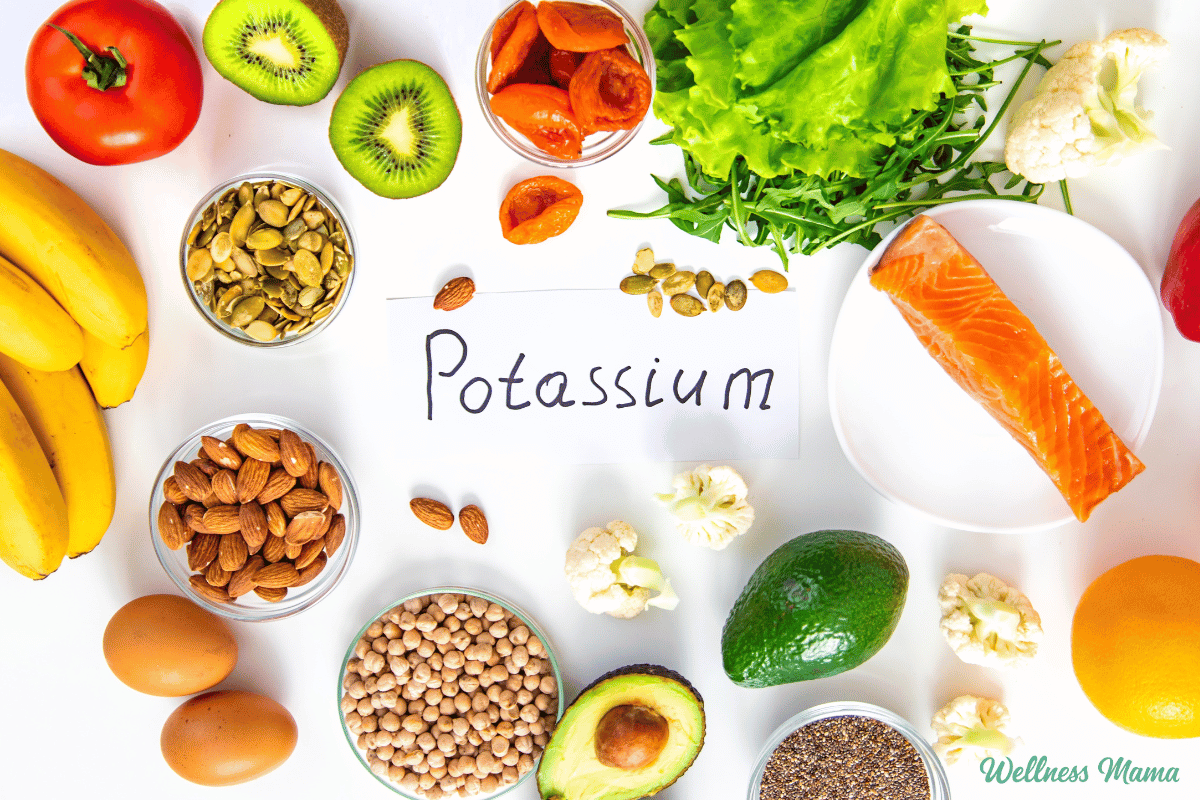
Many whole foods have potassium, we just have to prioritize eating them. Some of the richest sources include:
- Potatoes and sweet potatoes
- Avocados
- White beans
- Coconut water
- Leafy greens and spinach
- Citrus fruits and melons
- Squash
- Tomatoes
- Salmon
- Beets
- Kiwi
- Pomegranate
Most of us think of bananas, but they have less potassium compared to many of the above foods… even though they tend to get all of the credit.
I prioritize potassium-rich foods seasonally whenever possible. During warmer months, I naturally crave more hydrating foods like fruit and coconut water, especially after workouts or sauna sessions. In colder months, I tend to rely more on root vegetables and warming meals. I’ve found that simply increasing these foods consistently can make a noticeable difference in energy and hydration.
A Note About Potassium Supplements
While I prioritize potassium rich foods, I also add some supplemental potassium. Let me give an important caveat here though.
When it comes to adding extra magnesium and sodium into our diet, most of us can tolerate fairly large amounts. On the other hand, potassium levels more rapidly shift and too much can be dangerous. These symptoms can range from muscle weakness and heart palpitations to serious heart problems.
Over-the-counter potassium supplements contain relatively small doses and are tightly controlled. Since potassium affects heart rhythm and electrical signaling, balance matters much more than taking large amounts.
I prefer to start with food first and use LMNT electrolytes as needed for balanced mineral intake. Then if I feel like I need some more, I’ll take a potassium supplement. As always, this is highly individualized, and it’s important to pay attention to how your own body responds.
Potassium and the “Electrical Body”
One concept I keep coming back to is the idea that the body is fundamentally electrical. Minerals aren’t just nutrients in the traditional sense. They help create the electrical environment that lets our cells communicate.
Potassium plays a major role in maintaining that stable electrical environment. When levels are good we have more steady energy, calmer nerve signaling, more stable blood sugar, smoother muscle function, and balanced hydration. When levels are too low, we instead start to feel overstimulated yet exhausted at the same time.
It’s one reason why people often notice huge improvements when they finally address mineral deficiencies. Sometimes what feels like chronic stress or low energy may partly be the body struggling to maintain electrical balance at the cellular level.
Final Thoughts on Potassium
The deeper I dive into mineral health, the more convinced I am that potassium is one of the most underrated nutrients in modern wellness. It affects nearly every system in the body, from the nervous system and hormones to digestion, blood sugar, and energy production. Yet most people get far less than the body needs. Especially in today’s high-stress, highly processed modern environment.
For me, focusing on potassium alongside sodium and magnesium was one of the most noticeable foundational shifts I’ve made for my health. I noticed feeling calmer, more energized, and more resilient overall. While potassium isn’t a magic fix, the body functions remarkably better when we give it the minerals it needs.
Do you try to get potassium in your diet? What are some ways you try to get enough? Leave a comment and let us know!
