
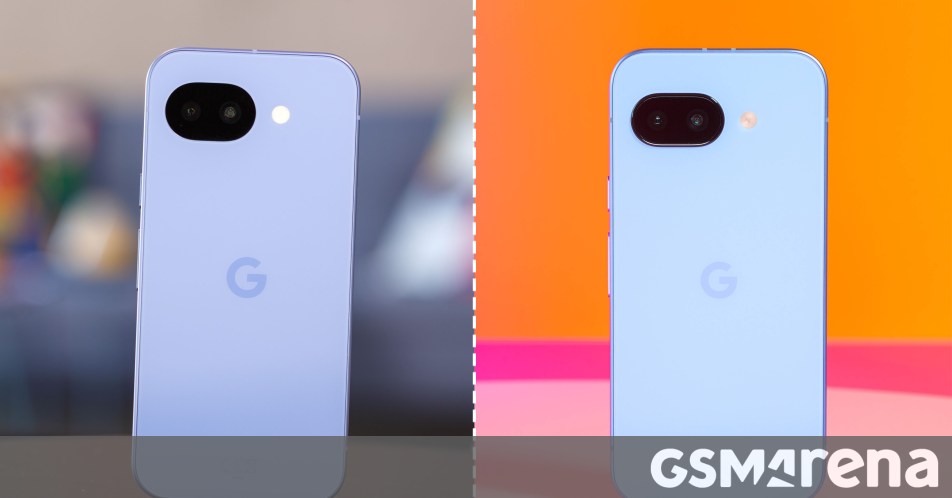
We rarely come across two phones that are so similar. The newly launched Google Pixel 10a is unapologetically more or less the same phone as its predecessor, the Pixel 9a.
This leaves those looking for an affordable Pixel this year in a quandary. Should you go for the newer model, or should you just save some money and get last year’s. And what even are some of these minor differences that separate the two? Well, let’s find out.
Table of Contents:
For starters, you can compare the complete specs sheets or directly continue with our editor’s assessment in the following text.
Size comparison
The two Pixels are nearly identical in dimensions. The newer Pixel 10a is slightly narrower and shorter due to a reduction in the thickness of the aluminum frame. This results in a slight overall reduction in the thickness of the bezels around the display, but you’d be hard-pressed to notice the difference.
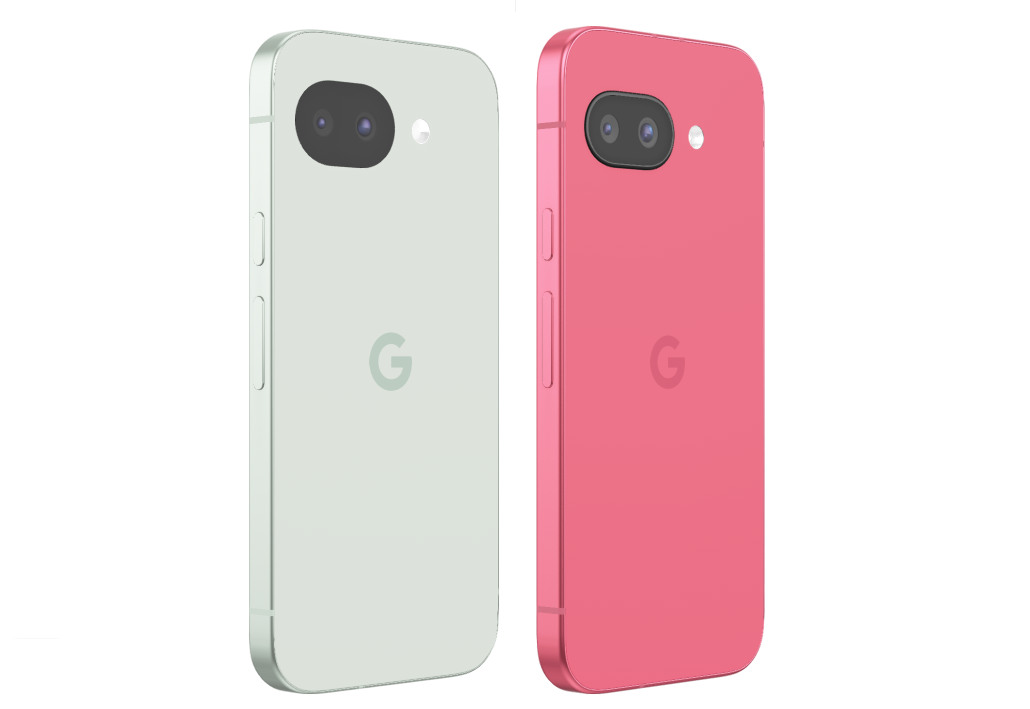
The new Pixel 10a is also slightly thicker. By doing so, Google has eliminated the tiny camera bump present on the Pixel 9a, resulting in a completely flush back panel for what that’s worth.
Both phones weigh about the same, and there’s no real noticeable difference in the hand feel.
Aesthetically, as well, there isn’t much difference between the two, and they would have been difficult to tell apart from a distance had it not been for the updated colors.
Display comparison
Both phones have identical display hardware. Google claims that the Pixel 10a display can get 200-300 nits brighter, and this was observed during our testing as well. However, the difference is relatively small and difficult to perceive at those values.
An important upgrade on the Pixel 10a is the switch on both the front and back to the much newer and sturdier Corning Gorilla Glass 7i from the Gorilla Glass 3 used on the 9a. This should make the glass much more durable against drops and scratches.
Battery life
The Pixel 10a and the Pixel 9a use the exact same battery, which is a 5100mAh Li-ion unit. On paper, the Pixel 10a should provide the same battery life as its predecessor, but thanks to a new modem and some possible improvements in software, it actually provided much better results. It’s possible the Pixel 9a has improved since our last test due to the software updates it received over thepasta yea,r, but we couldn’t retest it for this comparison, so we are using the numbers we got when we reviewed it initially.
Charging speed
The Pixel 10a supports up to 30W fast wired and up to 10W wireless charging, up from 23W and 7.5W on the Pixel 9a.
In our testing, the Pixel 10a only showed a minor improvement in charging speeds, in the range of 4-5% at any given point. As such, it remains a slow charging phone compared to most other Android phones on the market today but objectively, the newer model is slightly faster.
Speaker test
Both the Pixel 10a and the Pixel 9a have a set of stereo speakers. The two phones have different tunings, with the newer Pixel 10a sounding more balanced, with a richer bass response, but the 9a sounds a bit clearer and louder in comparison. While this can be subjective, the Pixel 10a does sound better overall in a direct comparison.
Performance
The Pixel 10a runs on the same Tensor G4 chipset as the 2025 Pixel 9a, which itself inherited the chip from the 2024 Pixel 9 lineup. Considering the fact that the performance of this chip wasn’t thrilling even back in 2024, it feels especially underwhelming in 2026. There are now vastly cheaper phones that can run circles around these phones in terms of performance, and it’s really not even close. Had Google at least chosen to include the Tensor G5 on the 10a, then we may have had a different conversation.
It has to be said that neither of these phones is slow or unusable by any means, but knowing you can do a lot better while spending less does them no favors. At least in the 9a’s case, there is the justification of it being a year old, and it’s entirely common for the A-series Pixels to get the chip from the previous year’s more expensive models. However, the 10a has no such excuse to fall back on, and the lack of any major performance improvement remains its biggest offense.
Benchmark performance
As you can imaging, both the Pixel phones are practically identical in terms of their performance. Any differences noticed here are more likely down to run to run variances between the tests ran on the 10a recently and on the 9a last year and software version differences, than any actual change in their performance. You really are getting the same basic performance a second time in a row, and it wasn’t enthralling to begin with.
Camera comparison
Continuing the list of commonalities is the camera hardware. Both phones pack the exact same set of 48MP main, 13MP ultra-wide, and 13MP front cameras, with the differences largely being in the software. The Pixel 10a has a handful of extras, including Camera Coach, Auto Best Take, and the ability to save images in Display P3 color space, but none of these make a meaningful difference.
Image quality
Thanks to the sharing of the hardware, the camera comparison is straightforward. The two phones are, once again, functionally identical.
Starting with the main camera, both produce respectable results, with the same familiar Pixel look to both of them. The colors and white balance are usually accurate, there is a reasonable amount of detail, and dynamic range is good. The images look their best on the phone screens, as you get to benefit from the Ultra HDR feature of their screens.








Main camera: Pixel 10a • Pixel 9a
The 2x mode also produces decent results most of the time on both phones, and both also tend to miss white balance at times.




Main camera 2x digital zoom: Pixel 10a • Pixel 9a
Finally, the ultra-wide camera produces usable, if underwhelming, results on both phones.








Ultra-wide camera: Pixel 10a • Pixel 9a
Verdict
Trying to pick between the Google Pixel 10a and the Pixel 9a feels like splitting hairs most of the time. The newer phone has some advantages in the form of better battery life, slightly brighter display, slightly better sounding speakers, slightly faster charging, and sturdier display glass, but they often don’t amount to much in everyday usage. The downside of being largely the same phone means the Pixel 10a also inherits the 9a’s flaws in the form of bloated bezels, slow charging, and performance that is now thoroughly outclassed by newer and cheaper competition.
Still, we are not talking about other phones today. Comparing strictly between these two, the Pixel 10a is objectively better, but also costs $100 more. Eventually, that price difference would go away and so would the Pixel 9a, making the choice infinitely simpler. But if you must pick today, then the cheaper Pixel 9a comes across as the more sensible choice.

- Stronger display glass
- Better battery life
- Slightly faster charging
- Better sounding speakers
- Slightly brighter display
- One extra year of software updates
Get the Google Pixel 10a for:

- Mostly the same phone as the 10 but $100 cheaper
Get the Google Pixel 9a for:
