
(RNS) — With more than 20 South Asian cultural and religious organizations on the campus of University of Illinois, where 25% of the student population is Asian, Connecticut native Rishabh Bhandari felt spoilt for choice as an eager freshman.
Yet despite the widespread popularity of large-scale Diwali and Holi events, Bhandari said he felt there was a lack of focus on Hindu practices.
“There was no, like, place where I could just go and either pray or have some place where we can do puja (rituals) or anything for those big holidays. So it kind of just became like you go to parties, rather than any religious aspect,” said the aerospace engineering major.
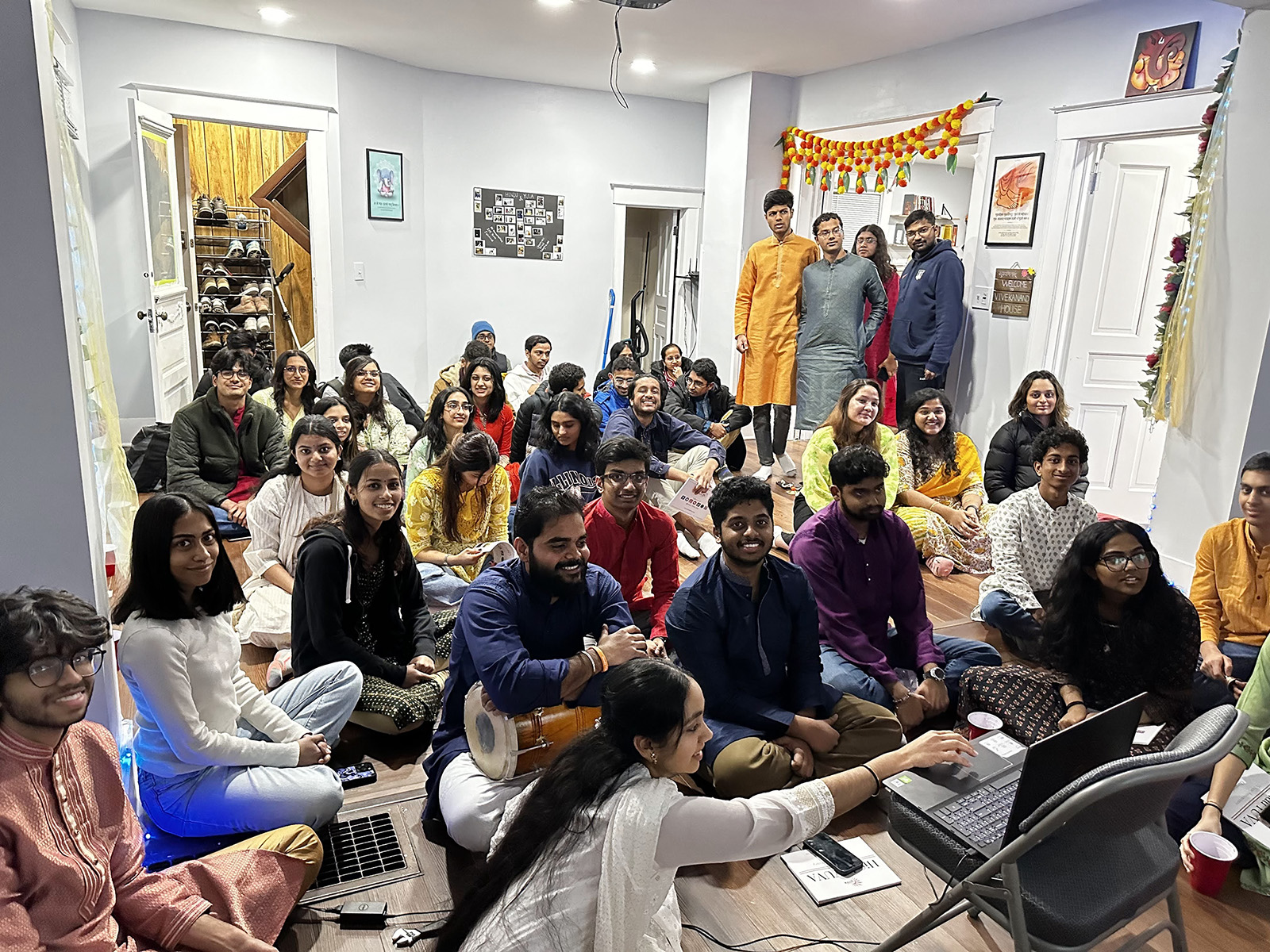
This sentiment — that Hindu holidays and teachings were being watered down in college life — led to the 2018 formation of the on-campus Hindu student center Vivekananda House on Iowa State’s campus. Since then, seven more U.S. college campuses have opened a Vivekananda House — University of Texas in Austin, Carnegie Mellon, the University of Illinois Urbana-Champaign, Virginia Tech, Purdue, Texas A&M and Worcester Polytechnic Institute. Vivekananda Houses, named after the prolific guru Swami Vivekananda and modeled after successful religious campus organizations like the Jewish Hillel, offer a living and community space to young Hindus, including a home temple on the ground floor. Sometimes it’s the only accessible Hindu temple space anywhere near campus, said Bhandari.
“As we grow up, especially if we’re born and raised in America, slowly, slowly, especially at our age, it’s very hard to maintain a connection with the culture, because we’re all doing so many things,” said Bhandari, who lived in the house and now coordinates its activities as a senior. “If we have to go out of our way to do something, it’s just easier not to do it. So I think it’s very good that we have this because it’s close by, so it’s not that much effort to go there, and it’s a good community that we’ve built, and we are continuing to build.”

Hindu YUVA, the 2006-born group behind Vivekananda House, is the largest Hindu student organization in North America with a presence on 50 campuses. At age 27, Viswajith Mallampati, national director for Hindu YUVA, says he’s one of the oldest to work on the newer VH project, which is by and for young people. As VH houses have grown as a presence across campuses, including two all-female residences, Mallampati says ultimately the goal is for the spaces to be used by larger national Hindu organizations — like BAPS, ISKCON, and Chinmaya Mission.
“The goal is not to compete with any other organization or be bigger than any other organization on campus,” Mallampati said. “It’s how do we complement each other and make sure that there’s a more comprehensive experience that students can feel and go through.”
Vivekananda Houses differ from campus to campus, based on the needs of the students. Some crave daily yoga and meditation classes, some long to celebrate their family’s regional practices and some just stop in for a quick prayer before a big exam. The houses see students who have never spoken Sanskrit, the language of ritual, and international students who have studied with gurus in India. All are seeking connection to the rituals and practices of Hinduism, said Mallampati.
“The main focus is very much around this aspect of community building,” he said.
An average of three to five students actually live in the Vivekananda Houses on campuses. It can be a tough sell, said Bhandari, as residents are required to cook vegetarian food and abstain from alcohol or drugs. But even so, “over the course of a semester, you’ll be good friends with 50 people who come to the house regularly or just to hang out. And then over 300 people will know my face and my name, and they will know you.”
Last year, Mallampati and a few other YUVA alumni started another kind of Vivekananda House, called Keshavam, for young professionals, in Washington, D.C., many of whom Mallampati said, are transplants to the city and don’t have family there.
“There’s no other Hindu organization or mandir that has space in the city of D.C.,” he said. “So (we can have) a space that’s Metro accessible, for young people to just come after work and hang out, watch sports or cook dinner together or celebrate a festival on the day of the festival instead of waiting for the weekend to go to a mandir.”

Shreyasi Tamhane, one of the three residents at UT Austin’s all-female Vivekananda House, says her draw to ritual and prayer grew stronger as a part of the campus Hindu community, where she can take an active role.
“When we’re home, we’re a little bit more passive to how everything is happening, because mainly the adults do everything,” she said. “But here, I think I’ve learned a little bit more about Hinduism and how we’re supposed to be doing it together,” Tamhane said.
Prayer every day is “not so consistent,” she said, because of college life, but Tamhane has appreciated learning and contributing to the puja process in the VH — from which fruits and flowers to buy to which chants to speak.
“I feel like togetherness is one of the core pillars or functions of Hinduism. So like, learning how to do pujas together, learning why we do these things in the first place together is just a lot more wholesome for me,” she said.


Smaran Karthik, a junior at Texas A&M, grew up as an Indian classical singer, traveling in and out of Hindu temples in Texas to perform. But attending weekly meetings at his campus’s Vivekananda House solidified his personal connection to the faith as a college-age American. The idea of dharma, or duty in Hinduism, helped him figure out when it’s best to stay in and study for a test or go out with friends. And pranayama, the ancient Indic form of breathwork, is what helps him keep his cool during especially stressful moments, he said.
The ideas of Hinduism are being “repackaged” for his generation through campus Vivekananda Houses, and that’s part of why they’re popular, Karthik said.
“When you have undergrads that you know kind of fully grew up here, but now they’re really getting into our culture, I think that’s a sign of things shifting,” he said. “People are starting to now really look at the actual content of Hinduism for themselves. I think that mentality is really pushing a lot of Hindus toward almost a New Age Hinduism.”
