

Moneywise and Yahoo Finance LLC may earn commission or revenue through links in the content below.
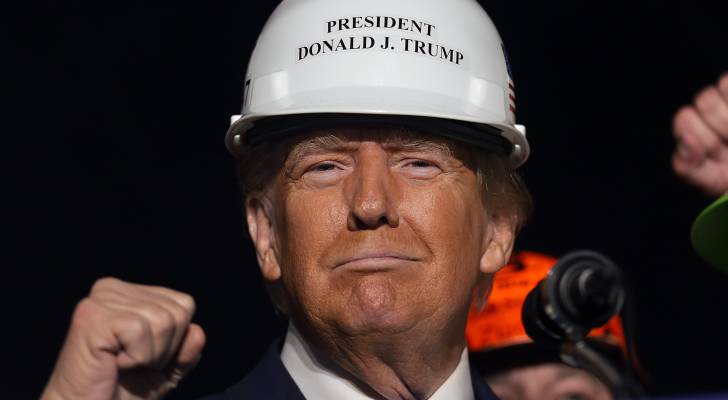
President Donald Trump made a bold prediction about falling gas prices during his tour of Asia in October, while touting his “drill, baby, drill” slogan.
During a press conference in Tokyo covered by Fox News, Trump claimed that Americans are “going to see $2 gasoline pretty soon,” adding that the price drop would prove “the equivalent of something bigger than a tax cut (1).”
On Dec. 8, the White House announced that gas prices are falling, and have hit that $2 per gallon mark at some stations in four states: Kansas, Oklahoma, Texas and Colorado (2). On Dec. 18 this list was expanded to include Missouri, Tennessee and South Dakota, according to Rapid Response 47 — an official government account on X that shares White House updates (3).
The national average price for regular gas hasn’t dropped under $2 a gallon since May 2020, according to government data. Lowering gas prices was one of the President’s campaign promises.
However, most states are still hovering around the $3 mark, with the White House reporting that average gas prices have slipped below $3 per gallon in 40 states, under $2.75 per gallon in 24 states, and to less than $2.50 per gallon in nine states.
The news prompted a victory lap from the White House, though many experts largely credit the drop to increased production from OPEC+ nations.
“While some may be quick to assign political credit, the reality is that global supply dynamics — particularly OPEC’s production decisions — have been the primary force behind the relief drivers are seeing at the pump,” Patrick De Haan, GasBuddy’s head of petroleum analysis, said in an interview with CNN (4).
Downward-trending gas prices could mean significant relief for Americans struggling with the rising cost of living. But will they get low enough across every state to fulfill Trump’s promise?
Trump’s “drill baby drill” policy is not off to a great start. A Yale School of the Environment analysis noted that oil production is growing more slowly than it did under President Biden, while the number of oil rigs in the U.S. has actually fallen since Trump took office (5).
